



Have you noticed gaps between your bricks or mortar crumbling when you touch it? Furthermore, brick mortar repair is essential maintenance that protects your home’s structural integrity and curb appeal. Moreover, when mortar joint repair is delayed, water infiltrates your walls causing crumbling mortar conditions that spread throughout your masonry. Consequently, deteriorating mortar allows water to freeze and expand inside joints, causing progressive mortar damage each winter. In addition, professional tuckpointing removes damaged mortar and replaces it with fresh material that restores protection. Furthermore, repointing addresses mortar deterioration before it compromises your entire wall system. Therefore, understanding the signs of crumbling mortar helps you act before minor issues become major structural problems. Consequently, scheduling brick mortar repair near you with qualified masons protects your home and prevents expensive rebuilding.
Understanding Brick Mortar
Specifically, before exploring brick mortar repair, understanding how mortar functions helps homeowners appreciate its importance.
How Mortar Works
Furthermore, mortar serves multiple critical functions in your masonry:
- Specifically, it bonds bricks together into a solid structure
- Furthermore, it cushions bricks from direct contact with each other
- Moreover, it seals joints against water infiltration effectively
- Additionally, it allows slight movement without cracking the bricks
- Consequently, it distributes structural loads evenly across the wall
Therefore, when mortar fails, the entire wall system becomes vulnerable to mortar damage.
Why Mortar Deteriorates
Moreover, mortar is designed to be softer than bricks for good reason:
- Specifically, it absorbs stress that would otherwise crack bricks
- Furthermore, it serves as sacrificial material protecting your masonry
- Moreover, it is expected to need replacement over its lifespan
- Additionally, typical mortar lasts 25 to 30 years before needing attention
- Consequently, environmental factors accelerate wear beyond normal aging
In addition, according to the Masonry Institute of America, regular mortar joint repair extends masonry life by decades.
Signs of Crumbling Mortar
Additionally, recognizing crumbling mortar early prevents extensive damage. Therefore, watch for these warning signs throughout your masonry.
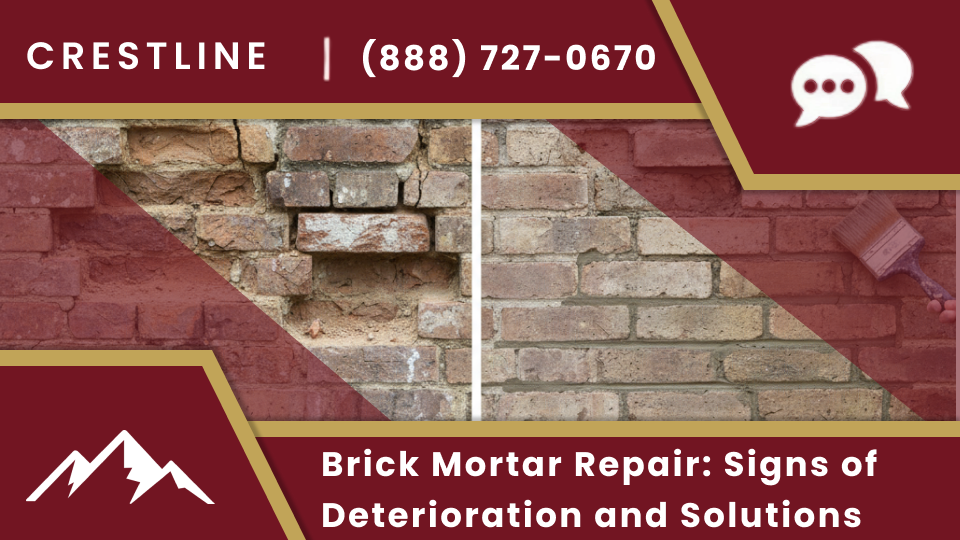
Crumbling Mortar: Visible Joint Deterioration
Furthermore, look for these obvious signs of failing mortar:
- Specifically, mortar recessed deeper than brick faces
- Furthermore, sandy or powdery texture when touched
- Moreover, mortar falling out in chunks when disturbed
- Additionally, visible gaps appearing between bricks
- Consequently, joints appearing weathered and worn throughout
Therefore, visible deterioration confirms deteriorating mortar requiring professional attention.
Deteriorating Mortar: Efflorescence
Similarly, white deposits indicate moisture problems in your masonry:
- Specifically, white powdery substance appearing on brick surfaces
- Furthermore, crystalline deposits forming around mortar joints
- Moreover, staining that returns repeatedly after cleaning
- Additionally, this indicates water passing through the mortar
- Consequently, efflorescence is a clear sign of mortar deterioration allowing infiltration
Hence, efflorescence signals that mortar damage is allowing water penetration into your walls.
Crumbling Mortar: Cracks in Joints
Likewise, fractures indicate failing mortar throughout your masonry:
- Specifically, hairline cracks developing along mortar joints
- Furthermore, cracks widening progressively over time
- Moreover, vertical or horizontal crack patterns appearing
- Additionally, cracks allowing water entry into the wall system
- Consequently, multiple cracks spreading across the wall area
Therefore, cracking represents clear signs of crumbling mortar needing professional repair.
Mortar Damage: Interior Water Signs
In addition, inside symptoms often indicate exterior mortar problems:
- Specifically, damp spots appearing on interior walls near masonry
- Furthermore, mold or mildew growing on inside surfaces
- Moreover, peeling paint near brick walls throughout the home
- Additionally, musty odors developing in affected areas
- Consequently, water stains appearing after rainstorms
Consequently, interior moisture often traces back to deteriorating mortar on exterior walls.
Common Causes of Mortar Damage
Moreover, understanding what causes mortar damage helps with prevention and repair planning.
Mortar Deterioration from Weather
Furthermore, environmental exposure weakens mortar over time:
- Specifically, rain saturates mortar joints with every storm
- Furthermore, freeze-thaw cycles crack and crumble mortar each winter
- Moreover, wind erosion wears joint surfaces gradually
- Additionally, sun exposure degrades mortar compounds over years
- Consequently, temperature cycling causes expansion and contraction stress
Therefore, weather represents the primary cause of mortar deterioration in most homes.
Mortar Damage from Water Infiltration
Similarly, moisture accelerates deterioration significantly:
- Specifically, improper drainage directing water at walls
- Furthermore, missing or damaged gutters splashing water onto masonry
- Moreover, ground sloping toward the foundation instead of away
- Additionally, sprinklers hitting masonry surfaces regularly
- Consequently, poor flashing allowing water entry at roof transitions
Hence, water exposure dramatically accelerates crumbling mortar conditions.
Deteriorating Mortar from Age
Likewise, mortar has a finite lifespan regardless of conditions:
- Specifically, binder materials break down naturally over time
- Furthermore, decades of stress accumulate damage progressively
- Moreover, original materials may have been inferior quality
- Additionally, previous repairs may now be failing themselves
- Consequently, environmental conditions affect overall longevity
Therefore, aging naturally creates mortar damage requiring professional attention.
Mortar Deterioration from Settlement
In addition, structural movement damages mortar joints:
- Specifically, foundation settlement cracks mortar joints
- Furthermore, soil expansion stresses walls and mortar
- Moreover, tree roots cause movement beneath foundations
- Additionally, vibration from traffic or construction loosens joints
- Consequently, structural modifications affect load distribution
Consequently, settlement creates deteriorating mortar from mechanical stress over time.
Understanding Tuckpointing and Repointing
Furthermore, professional tuckpointing and repointing address mortar damage through different approaches.
What Is Repointing?
Moreover, repointing involves replacing deteriorated mortar directly:
- Specifically, technicians remove damaged mortar to proper depth
- Furthermore, they clean joints of all debris and dust
- Moreover, they apply new mortar carefully matching the original
- Additionally, they tool joints to the proper profile for drainage
- Consequently, they allow proper curing time for maximum strength
Therefore, repointing provides essential brick mortar repair for most residential situations.
What Is Tuckpointing?
Similarly, tuckpointing creates a decorative contrast effect:
- Specifically, masons fill joints with mortar matching the brick color
- Furthermore, they apply a thin line of contrasting color mortar
- Moreover, this creates the illusion of very fine, precise joints
- Additionally, this historic technique produces an elegant appearance
- Consequently, tuckpointing is more labor-intensive than standard repointing
Hence, tuckpointing combines mortar joint repair with aesthetic enhancement beautifully.
Tuckpointing vs Repointing: Which Do You Need?
In addition, choosing between these methods depends on your goals. Specifically, repointing focuses on structural repair at a lower cost and works best for most standard repairs. Furthermore, tuckpointing combines repair with decorative contrast at a higher cost and works best for historic restoration. Moreover, both methods address crumbling mortar effectively, so the choice depends on whether aesthetics matter for your project.
The Brick Mortar Repair Process
Moreover, understanding brick mortar repair helps you know what to expect from professional service.
Mortar Joint Repair: Assessment
Furthermore, professional evaluation includes several critical steps:
- Specifically, inspecting the full extent of mortar damage
- Furthermore, assessing mortar composition for proper matching
- Moreover, checking for underlying structural issues
- Additionally, determining the complete repair scope needed
- Consequently, planning a matching mortar mix for seamless results
Therefore, proper assessment ensures effective mortar joint repair from the start.
Brick Mortar Repair: Mortar Removal
Similarly, careful removal protects your bricks from damage:
- Specifically, removing damaged mortar to a minimum 3/4 inch depth
- Furthermore, using appropriate tools to avoid chipping bricks
- Moreover, cleaning joints thoroughly after removal
- Additionally, removing all loose material from every joint
- Consequently, preparing surfaces properly for new mortar adhesion
Consequently, proper removal sets the foundation for lasting brick mortar repair.
Mortar Joint Repair: New Mortar Application
Likewise, installing fresh mortar requires precision:
- Specifically, mixing mortar to match original composition exactly
- Furthermore, applying in thin layers that allow proper bonding
- Moreover, compacting mortar fully into every joint
- Additionally, filling joints completely without leaving gaps
- Consequently, avoiding smearing mortar on brick faces
Brick Mortar Repair: Tooling and Finishing
In addition, final steps complete the professional repair:
- Specifically, tooling joints to match the existing profile exactly
- Furthermore, common profiles include concave, V-shaped, and flush
- Moreover, timing is critical for proper tooling results
- Additionally, cleaning excess mortar from brick faces carefully
- Consequently, protecting the work from rain during initial curing
Therefore, proper finishing ensures tuckpointing or repointing matches existing work seamlessly.
DIY vs Professional Brick Mortar Repair
Furthermore, understanding when to call professionals ensures quality mortar joint repair results.
When DIY Mortar Joint Repair Works
Moreover, small projects homeowners can handle include:
- Specifically, minor repairs to small, easily accessible areas
- Furthermore, cosmetic touch-ups on non-structural surfaces
- Moreover, learning experience on hidden or non-visible areas
When Professional Brick Mortar Repair Is Needed
Similarly, call professionals when these conditions exist:
- Specifically, large areas requiring extensive repair work
- Furthermore, structural walls that bear weight are involved
- Moreover, high or difficult access is required for the work
- Additionally, mortar matching is critical for appearance
- Consequently, water infiltration is actively occurring through joints
Therefore, professional brick mortar repair ensures proper materials and techniques for lasting results.
Risks of Improper Repair
In addition, DIY mistakes cause serious problems:
- Specifically, wrong mortar mix can actually damage your bricks
- Furthermore, incomplete removal leads to premature failure
- Moreover, poor tooling allows continued water entry
- Additionally, mismatched mortar looks obviously wrong
- Consequently, structural integrity becomes compromised
Hence, when uncertain, professional brick mortar repair near you provides better and safer results.
Finding Brick Mortar Repair Near You
Moreover, when mortar damage requires professional attention, choosing qualified masons matters significantly.
What to Expect from Professional Service
Furthermore, when scheduling brick mortar repair near you, expect a thorough process. Specifically, service begins with a complete inspection of all masonry surfaces. Additionally, technicians assess mortar condition and recommend the proper repair scope. Moreover, they provide mortar sample matching and a written estimate before any work begins. Consequently, quality workmanship and proper curing guidance ensure lasting results.
Finding Quality Brick Mortar Repair Near You
Similarly, look for these qualifications when choosing a provider:
- Specifically, licensed masonry contractor with proper credentials
- Furthermore, experience with your specific brick type
- Moreover, knowledge of historic mortar if applicable to your home
- Additionally, positive customer reviews and a portfolio of completed work
- Consequently, written warranties on all materials and labor
Brick Mortar Repair Cost Considerations
In addition, tuckpointing and repointing costs vary by scope. Specifically, small repairs under 10 square feet typically cost $200 to $500. Furthermore, standard repointing runs $8 to $15 per square foot. Moreover, tuckpointing costs $12 to $25 per square foot due to additional labor. Additionally, full wall repointing ranges from $1,000 to $3,000 or more. Consequently, historic mortar matching adds an additional 20 to 30 percent to the total cost.
Preventing Future Mortar Damage
Additionally, after brick mortar repair, proper maintenance extends mortar life for decades.
Control Water Exposure
Furthermore, reducing moisture contact protects your mortar investment:
- Specifically, maintain gutters and downspouts for proper drainage
- Furthermore, direct water away from walls at the foundation level
- Moreover, fix any leaking pipes or fixtures near masonry
- Additionally, adjust sprinklers away from masonry surfaces
Regular Inspection
Similarly, monitoring mortar condition catches problems early:
- Specifically, perform annual visual inspection of all mortar joints
- Furthermore, check condition after severe weather events
- Moreover, note any new cracks or gaps as they develop
- Additionally, watch for efflorescence returning on surfaces
Proper Cleaning Methods
Likewise, avoid cleaning methods that damage mortar:
- Specifically, never use high-pressure washing directly on mortar joints
- Furthermore, avoid acidic cleaners on new or repaired mortar
- Moreover, use gentle cleaning methods that protect joint integrity
- Additionally, consult professionals for stubborn stains on masonry
Address Issues Promptly
Consequently, timely action prevents small problems from becoming large ones:
- Specifically, small repairs now prevent large problems later
- Furthermore, water damage spreads quickly through compromised joints
- Moreover, early repair costs significantly less than delayed work
- Additionally, regular maintenance saves money over the long term
Final Thoughts on Brick Mortar Repair
In fact, brick mortar repair protects your masonry from water damage, structural deterioration, and aesthetic decline. Moreover, crumbling mortar and deteriorating mortar cannot keep moisture out or hold bricks securely, leading to accelerating mortar damage that spreads throughout your walls.
Furthermore, professional tuckpointing or repointing removes failing material and replaces it with properly matched mortar that restores protection for decades. Consequently, quality mortar joint repair addresses mortar deterioration before it compromises your entire masonry structure.
Therefore, don’t let failing mortar damage your brick walls or foundation. In addition, schedule brick mortar repair near you with qualified masonry professionals at the first signs of deterioration. Consequently, timely repair protects your home’s structural integrity, weather resistance, and lasting curb appeal.
Phone: (206) 876-9660
Email: office@wa.crestln.com
Website: https://wa.crestln.com/